
LaSalle County Court Records After a Jail Arrest
After a LaSalle County arrest, the public trail splits into two record systems. The jail side records the booking and custody. The court side records the charges a prosecutor files and the case that follows. The jail roster can confirm that a person was booked or released, but it does not tell you what charges the prosecutor actually filed, what case number was assigned, or when the next hearing falls. For that, you read the court record kept by the Circuit Clerk.
The booking side and the court side answer different questions. For custody, booking, and release, the LaSalle County jail inmate records page covers the roster, and booking photos sit on the jail mugshots page. The court record is the source for the charges themselves, their status, and the outcome. Treating these as one record is the most common error, since booking charges at intake can differ from the charges the prosecutor finally files.
How to Find LaSalle County Court Records After an Arrest
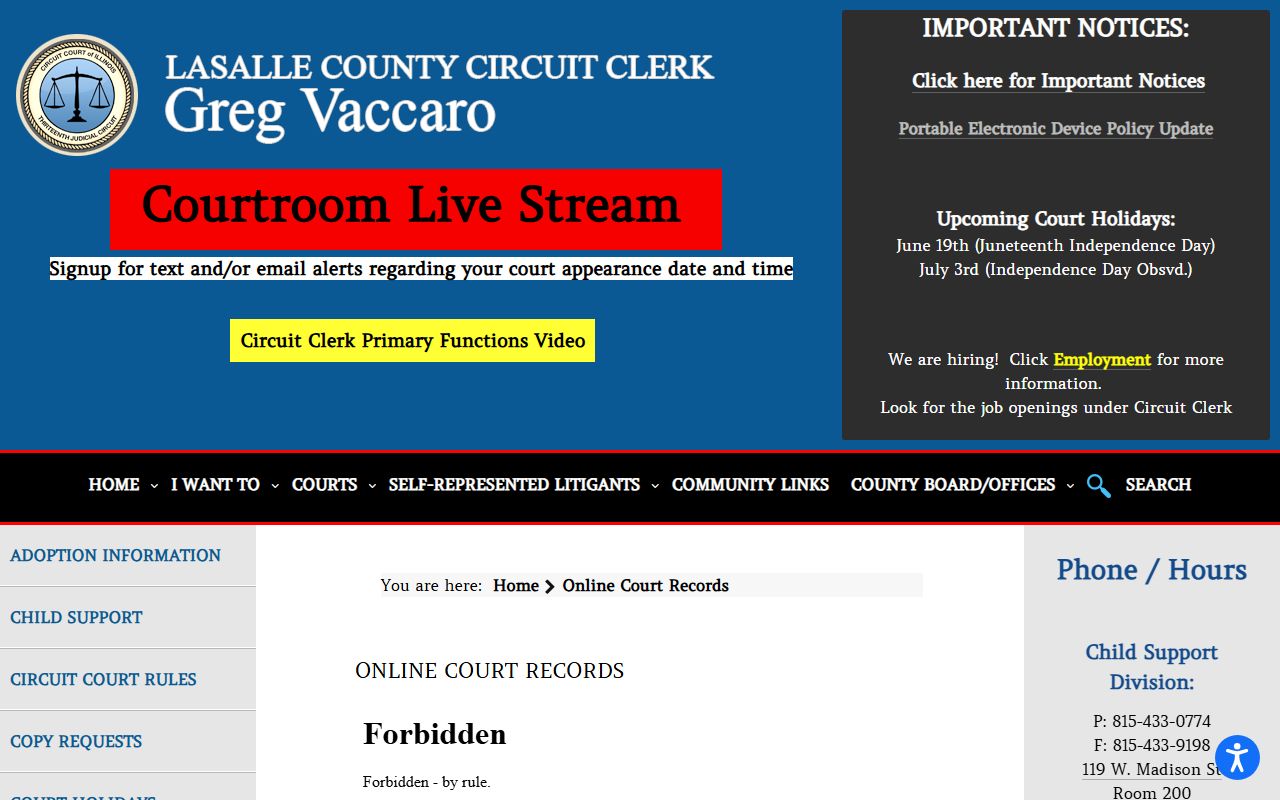
The official court source is the LaSalle County Circuit Clerk. The clerk's online court records page embeds a search application, and the office also keeps public viewing terminals in both courthouses where anyone can search free of charge. The clerk's snippet says a case can be looked up by participant name or by case number. Start at the county page rather than the raw application, so you see notices, holidays, and division contacts.
- Open the Circuit Clerk online court records page and load the embedded case-search application.
- Search by the defendant or participant name, or by the case number if you have it.
- Open the case and read the charge list, then check the filing and hearing entries.
- Note each charge's status, and if the online tool is hard to use, use a public terminal at the courthouse.
The county page is the link to bookmark because it routes users into the application with the right context. The Circuit Clerk online court records page embeds the search tool and lists the division contacts.
For a statewide criminal history rather than a single case, the Illinois State Police runs a name-based check through its CHIRP system, which uses an Illinois Digital ID login. That is a background-check tool, not the LaSalle County court docket, so use it only when you need a statewide transcript.
Court Record Access Channels After an Arrest
The court record is reachable in more than one way, and the right channel depends on what you know and how old the case is. The arrest-to-record path runs in a clear order: arrest, then booking at the jail, then a first appearance, then the prosecutor files the charging document, then the case record opens for searching. Each step feeds the next, so a very new arrest may not have a court case yet.
- Online - the Circuit Clerk online court records page embeds the case-search application for name or case-number lookups.
- In person - public viewing terminals in both courthouses let anyone search free of charge, which helps for older files.
- Counter and phone - the Traffic and Criminal Division at 707 Etna Road, Room 141, handles criminal and traffic case questions at 815-434-8271.
- Copies - certified or file-stamped copies go through the clerk and may require a fee or review.
Viewing a case online is not the same as obtaining a certified copy. A docket view answers most public questions, while certified, sealed, or confidential documents may need clerk handling or a court order.
How Charges Get Filed After a LaSalle County Arrest
Walk the path forward from the arrest. The person is booked at the jail, then the charge record begins when the prosecutor files a charging document. Illinois cases proceed by complaint, information, or indictment, depending on the offense. The booking charge listed at intake is not always the charge that ends up in the court file, since the State's Attorney reviews the matter before filing.
| Complaint | Information | Indictment | |
|---|---|---|---|
| Filed By | Officer or prosecutor | Prosecutor | Grand jury |
| Common For | Misdemeanors | Many felonies | Serious felonies |
| Starts | The case | The case | The case |
Charge Status in a LaSalle County Court Record
Charges change as a case moves. A charge can be amended, reduced, added, dropped, or dismissed, and the court record is where those changes show up. Because booking charges on the jail side can differ from what the prosecutor files, the court record is the better source for what a person actually faces. The common status terms are worth knowing before you read a docket.
| Status | What It Means |
|---|---|
| Pending | The charge is active and the case has not been resolved. |
| Amended / Reduced | The prosecutor changed or lowered the charge. |
| Dismissed | The charge was dropped and that count ends. |
| Nolle Prosequi | The prosecutor formally declines to pursue the charge. |
Release and Holds After a LaSalle County Arrest
Illinois changed how release works. Monetary bail was abolished for ordinary pretrial release on and after January 1, 2023, so a family normally does not post a cash bond at the jail to free someone after a new arrest. The court now decides release conditions or detention through a pretrial process. The jail still tells callers with bond questions to phone 815-434-8383, which is useful for custody status, but the deciding document is usually a court order, not a payment.
| Release Path | How It Works |
|---|---|
| Release by law enforcement | An officer may release a person after booking in some cases. |
| Pretrial release with conditions | The court releases the person with conditions and no money bail. |
| Detention after a hearing | The court may order continued detention for eligible cases. |
| Hold for another agency | A warrant or detainer can keep a person in custody even if the local case changes. |
Note: A commercial bail bondsman is not the normal path in Illinois after the Pretrial Fairness Act, so be wary of anyone selling that service for an ordinary new arrest.
Warrants Behind a LaSalle County Arrest
No public active-warrant search page for the sheriff was located in the official sources, so warrants are usually traced through custody and court records. If a person was just arrested on a warrant, check the iSOMS jail and intake-release pages, then call the jail for current status. When the warrant ties to a court case, the Circuit Clerk record by participant name or case number often shows the missed appearance, the issuing judge, and any recall or quash order. The Traffic and Criminal Division handles criminal and traffic case questions, and federal warrants run through the U.S. Marshals Northern District of Illinois.
Warrants come in a few common forms, and the type shapes where the answer lives.
- Arrest warrant - authorizes officers to take a named person into custody.
- Bench warrant - issued by a judge, often after a missed court date or a violation of a court order.
- Fugitive or out-of-county warrant - from another jurisdiction, and it can hold a person even after local charges are resolved.
- Probation or parole hold - a supervision-related custody issue handled outside the county jail roster.
Charges vs. Convictions
Being arrested and charged is not the same as being convicted. A charge is an accusation, and a conviction comes only after a plea, a finding, or a verdict and judgment. The jail roster and the early court record show charges, not guilt.
| Charge | Conviction | |
|---|---|---|
| Stage | Accusation | Verdict or plea |
| Burden of Proof | Probable cause | Beyond a reasonable doubt |
| Public Record | Yes | Yes |
Sealed vs. Expunged Court Records
When a case ends in a dismissal or another eligible outcome, a person may move to clear the record. Illinois treats sealing and expungement differently, and the Circuit Clerk handles these requests, including an expungement information page in its menu. Eligibility depends on the charge and the disposition, so the case number and any order should travel with the request.
| Sealed | Expunged | |
|---|---|---|
| Visibility | Hidden from public view | Destroyed or treated as if it never existed |
| Law Enforcement | Limited access | Very limited access |
| Handled Through | Circuit Clerk and the court | Circuit Clerk and the court |
The LaSalle County State's Attorney and Court Charges
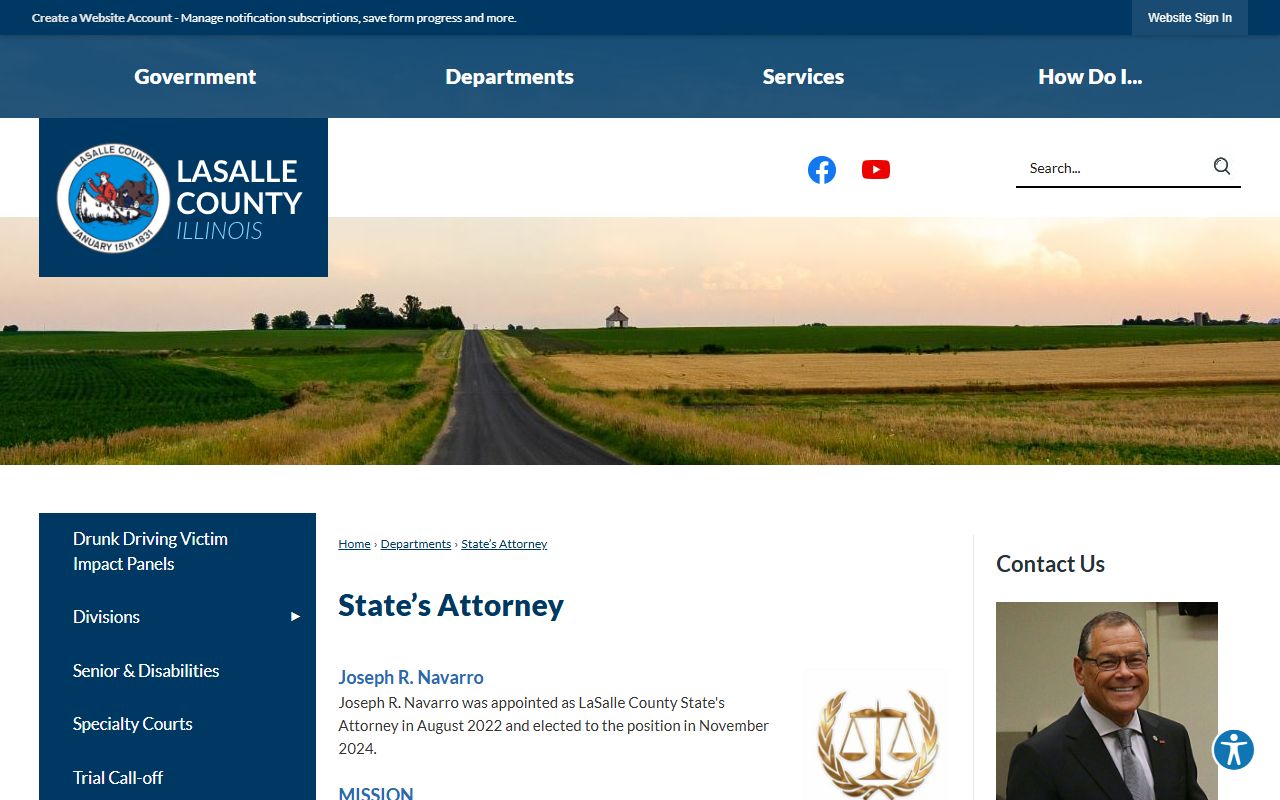
Illinois counties use a State's Attorney rather than a district attorney. The LaSalle County State's Attorney, Joseph R. Navarro, reviews arrests and files the criminal charges that open a case. The office sits at 707 Etna Road, Room 251, in Ottawa, and the directory advises callers to have the case number or the defendant name ready. The prosecutor's filed charges, not the booking charges, are what the court record reflects.
The official page is the place to confirm who the prosecutor is and how the office is reached. The LaSalle County State's Attorney page names the current prosecutor and outlines the office's role.
The State's Attorney works within ethical limits and is not a general legal-advice office, so case-specific questions about a defense belong with a private attorney or the public defender.
Background Checks and Court Records
A casual look at a court docket is not the same as a regulated background check. Formal employment, housing, and credit screening must run through Fair Credit Reporting Act channels, and a statewide criminal history comes from the Illinois State Police, not a single county docket.
Important: These public-record tools are not an FCRA-regulated consumer reporting service, and the information may not be used to screen someone for a job, a rental, credit, or insurance.
Restricted Court Records After a LaSalle County Arrest
Not every record after an arrest is open. Juvenile matters are restricted, sealed and expunged cases drop out of public view, and some dismissed charges may be withheld. Certified copies, confidential documents, and files under court order may require clerk review or may be unavailable to the general public. When a request touches one of these, the Circuit Clerk can explain what is releasable and what needs a court order, so identify the case number and the order if one exists.